YR 47 Issue 1 2011
Faces
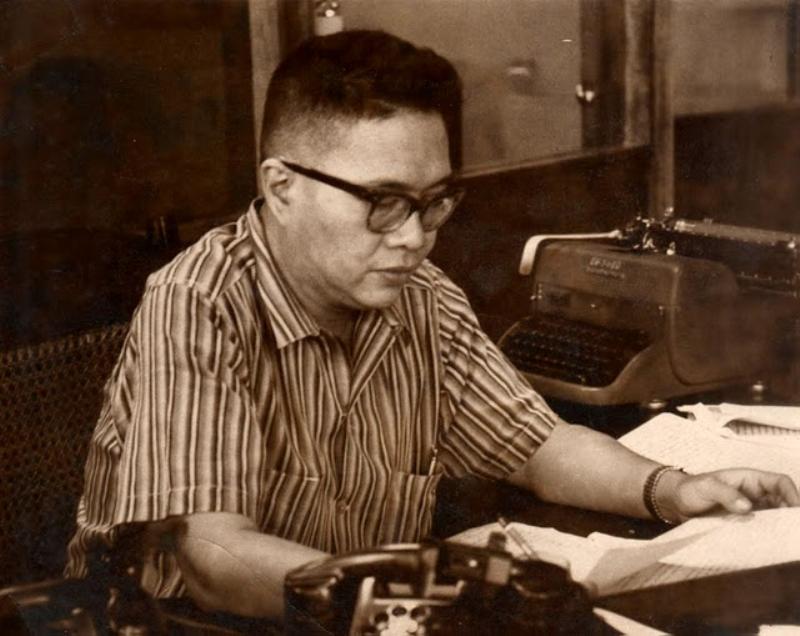
Felix Bautista
Memories of a well-loved Artlets pedagogue
Memories of a well-loved Artlets pedagogue
By TRINA MAE R. MENDIOLA and JENINA R. AVANCEÑA
Two decades after the death of well-loved Arts and Letters (Artlets) professor Felix Bautista, his influence continues to reverberate in the walls of the Faculty as students whose lives he had touched continue to remember the lessons they have learned from him.
JUST like how American writer Henry Adams puts it, “A teacher affects eternity, he can never tell where his influence stops.”
This quotation rings true for well-loved Arts and Letters (Artlets) professor Felix Bautista who, in his days at the University, had not only influenced his contemporaries and students, but touched their lives as well.
Alongside his passion to educate the younger generation, Felix kept on being true to his work as one of the leading writers in the country during his time.
Two decades after his death caused by kidney complication in 1991, his influence reverberates within the walls of the Faculty, continuously inspiring others to be passionate about their respective endeavors.
Humble beginnings
During the Japanese occupation, Bautista took a pre-law course at the Ateneo de Manila University. His father wanted him to become a lawyer by profession, but this did not stop him from pursuing his passion for writing. Three years after, he transferred to the University and pursued a degree in Political Science.
After earning his degree in 1948, Felix remained faithful to the University where he devoted most of his time teaching and serving as the publications director of The Varsitarian, its official student publication, for 17 years.
Different opportunities in the field of journalism came his way upon his graduation. He worked as a deskman in the Philippine Herald, senior editor for Agence France Presse (AFP), editor in chief of Evening News, undersecretary of the late president Corazon Aquino, and adviser of Cardinal Sin.
Being a proud Thomasian himself, Felix also influenced his children to study in UST.
“He really loved UST. All of us studied here except for my eldest brother who studied in Ateneo. But the rest of us studied here from elementary to college,” said Noel Martin Bautista, Felix’s eleventh son who is currently an Associate Professor at the Faculty of Medicine and Surgery.
Felix and his wife Lourdes actively became part of the Artlets community as they served not just as passionate mentors to students, but as well as their second parents. Until now, they are still remembered as icons of the Faculty who left a great imprint on the lives of their protégés.
Family man
Being a professor and active journalist during the Martial Law period took most of Felix’s time, but it never hindered him to build a strong bond with his wife and their 12 children.
Despite being busy pursuing different commitments during the height of the repressive Marcos era, he was able to establish a family that is centered on love and support for each other.
Lourdes described her husband as someone who is “loving and generous.” Their special bond brought by 47 years of marriage was often envied by other couples.
“Whenever people would ask me how I raised my children, I always tell them ‘on my knees,’” Lourdes said.
The memories of Felix’s fatherhood were something his children would always treasure and remember.
“He was a good father,” recalled Noel. “He was close to his children even though he was busy.”
In a speech delivered by his eldest son, Bienvenido, during Felix’s memorial services, he mentioned that his father loved the company of his children and grandchildren and would always do a “roll call” when someone was missing. Even during the time when he was lying on his hospital bed, Felix still did the roll call.
Bienvenido also shared that his father had “formulas for success” that were often discussed while they were having dinner together.
Raising a dozen children proved that Felix was a family man. The success he achieved in balancing his love for writing and his love for family revealed an inspiration to people who were often caught in between.
Tribute from colleagues
Upon his death, write-ups about his contribution in the field of humanities spread like wildfire.
“When he died, everyone wrote about him,” Lourdes said. “A lot of writers, whom he had influenced in one way or another, published their own tribute for Felix.” Most of the authors who wrote about him were his colleagues at work and his students at the University.
“Even with 12 children, the Bautistas–Felix and Nena–managed to act as surrogate parents to perhaps hundreds of students at UST,” Rina Jimenez-David wrote in her tribute.
Julie Yap-Daza, on the other hand, gave a vivid description of Felix as a well-loved professor in the Faculty.
“The learning part and the working part were interchangeable because he taught from experience. Instead of theories, he told anecdotes and vignettes. Principles were good, but actually, examples were better.” she wrote.
Max Soliven and Luis Beltran also gave tributes to the man who joined them in their journey as writers.
“It was his maturity which, oftentimes, restrained this frequently combative and over-enthusiastic ‘Boy Publisher’ from making rash mistakes,” Soliven wrote. Beltran, who was Felix’s colleague in the Evening News, credited the remarkable contribution the latter gave in the field of Philippine journalism.
“He [Felix] was one of those journalists who composed the pillars of journalism,” he said. F
JUST like how American writer Henry Adams puts it, “A teacher affects eternity, he can never tell where his influence stops.”
This quotation rings true for well-loved Arts and Letters (Artlets) professor Felix Bautista who, in his days at the University, had not only influenced his contemporaries and students, but touched their lives as well.
Alongside his passion to educate the younger generation, Felix kept on being true to his work as one of the leading writers in the country during his time.
Two decades after his death caused by kidney complication in 1991, his influence reverberates within the walls of the Faculty, continuously inspiring others to be passionate about their respective endeavors.
Humble beginnings
During the Japanese occupation, Bautista took a pre-law course at the Ateneo de Manila University. His father wanted him to become a lawyer by profession, but this did not stop him from pursuing his passion for writing. Three years after, he transferred to the University and pursued a degree in Political Science.
After earning his degree in 1948, Felix remained faithful to the University where he devoted most of his time teaching and serving as the publications director of The Varsitarian, its official student publication, for 17 years.
Different opportunities in the field of journalism came his way upon his graduation. He worked as a deskman in the Philippine Herald, senior editor for Agence France Presse (AFP), editor in chief of Evening News, undersecretary of the late president Corazon Aquino, and adviser of Cardinal Sin.
Being a proud Thomasian himself, Felix also influenced his children to study in UST.
“He really loved UST. All of us studied here except for my eldest brother who studied in Ateneo. But the rest of us studied here from elementary to college,” said Noel Martin Bautista, Felix’s eleventh son who is currently an Associate Professor at the Faculty of Medicine and Surgery.
Felix and his wife Lourdes actively became part of the Artlets community as they served not just as passionate mentors to students, but as well as their second parents. Until now, they are still remembered as icons of the Faculty who left a great imprint on the lives of their protégés.
Family man
Being a professor and active journalist during the Martial Law period took most of Felix’s time, but it never hindered him to build a strong bond with his wife and their 12 children.
Despite being busy pursuing different commitments during the height of the repressive Marcos era, he was able to establish a family that is centered on love and support for each other.
Lourdes described her husband as someone who is “loving and generous.” Their special bond brought by 47 years of marriage was often envied by other couples.
“Whenever people would ask me how I raised my children, I always tell them ‘on my knees,’” Lourdes said.
The memories of Felix’s fatherhood were something his children would always treasure and remember.
“He was a good father,” recalled Noel. “He was close to his children even though he was busy.”
In a speech delivered by his eldest son, Bienvenido, during Felix’s memorial services, he mentioned that his father loved the company of his children and grandchildren and would always do a “roll call” when someone was missing. Even during the time when he was lying on his hospital bed, Felix still did the roll call.
Bienvenido also shared that his father had “formulas for success” that were often discussed while they were having dinner together.
Raising a dozen children proved that Felix was a family man. The success he achieved in balancing his love for writing and his love for family revealed an inspiration to people who were often caught in between.
Tribute from colleagues
Upon his death, write-ups about his contribution in the field of humanities spread like wildfire.
“When he died, everyone wrote about him,” Lourdes said. “A lot of writers, whom he had influenced in one way or another, published their own tribute for Felix.” Most of the authors who wrote about him were his colleagues at work and his students at the University.
“Even with 12 children, the Bautistas–Felix and Nena–managed to act as surrogate parents to perhaps hundreds of students at UST,” Rina Jimenez-David wrote in her tribute.
Julie Yap-Daza, on the other hand, gave a vivid description of Felix as a well-loved professor in the Faculty.
“The learning part and the working part were interchangeable because he taught from experience. Instead of theories, he told anecdotes and vignettes. Principles were good, but actually, examples were better.” she wrote.
Max Soliven and Luis Beltran also gave tributes to the man who joined them in their journey as writers.
“It was his maturity which, oftentimes, restrained this frequently combative and over-enthusiastic ‘Boy Publisher’ from making rash mistakes,” Soliven wrote. Beltran, who was Felix’s colleague in the Evening News, credited the remarkable contribution the latter gave in the field of Philippine journalism.
“He [Felix] was one of those journalists who composed the pillars of journalism,” he said. F


Year 47 | Issue 3 | 2011
- Home
- Scenes
- Issues
- Perspectives
- Faces
- Letters
- Editorial Staff